Forum Activity for @benjamin-w-barr-jr

Ben Barr Jr
@benjamin-w-barr-jr
01/30/13 10:16:09PM
64 posts

Daniel Boone played a dulcimer


OFF TOPIC discussions

For some unknown reason, I think that I had seen this episode. I remember Fess Parker sitting in a straight-back chair, his wife combing her hair and then coming out and asking him how long he would be gone. Of course, I had no idea what the dulcimer was, and other than his laying it down on the seat, I can't say that I thought much of it...actually, the siting of the dulcimer was not very long in the scene.

Dana R. McCall
@dana-r-mccall
01/30/13 04:25:22PM
168 posts

Daniel Boone played a dulcimer


OFF TOPIC discussions

Here is a link to a Daniel Boone episode where Fess Parker sings to wife Rebecca, playing a dulcimer.


updated by @dana-r-mccall: 08/02/23 09:49:25PM
Strumelia
@strumelia
01/26/13 07:12:14PM
2,409 posts


Dan, as ken recommended, our member Randy Adams has almost 100 videos on this site, and many of them are played on fretless dulcimers that he made himself:

Randy's videos

Ken Hulme
@ken-hulme
01/26/13 06:15:24PM
2,157 posts


No dumb questions, Dan. Just ones we haven't answered yet!

Yes there are fretless dulcimers. Most of them have marked frets though. Some with thin bits of wood inlay. Do a Search here. IIIRC, Randy Adams is a player of a fretless dulcimer.

Ken Hulme
@ken-hulme
01/26/13 05:50:12PM
2,157 posts


Gosh Wayne, i'll have to find a scanner so I can convert them from paper to electrons. I didn't take many photos and those were "pre-digital". Here are two really small pix of instruments I made though...

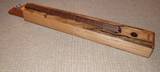
This one I called Fruit & Nuts; made from fruitwoods and nut woods. Mango top, Oak sides, Cherry fretboard, Lychee Nut nut and bridge, Kamani wood tuning head, Walnut soundhole inlay, I forget what else. With a 27" VSL, about 5" wide and 3" deep I built it as a "transitional dulcimer - half way between a zither and a mountain dulcimer. The shape and rough dimensions are taken from an 18th century zither in a museum collection in Germany. Instead of nearside half frets, I added a central raised fretboard - the hallmark of a dulcimer rather than its European ancestors.

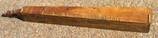
Here's a really crummy pix of a replica Langeleik - Norwegian dulcimer ancestor - that I made for the Norwegian Prez of a company I worked for up in Venice, FL before I retired. Notice the wooden frets set into the near edge and the other unfretted drones. The box is bottomless as was common with Langeleik as they were usually played on a table.

Ken Hulme
@ken-hulme
01/26/13 09:11:26AM
2,157 posts


We'd like to see a picture of your new instrument. Most here are not familiar with that builder, I suspect. Playing on a table top is VERY traditional. A number of pre-Revival builders put small feet on the bottom to raise the bottom off the table top and allow it to vibrate, giving louder sound. You may want to consider making a Possum Board - think 1/2" or thinner Poplar plank 5-8" wide x 36" long from the Lowes or Home Depot "hobby wood" section, with a couple 1/4" square rails glued across say 28" apart, to support your dulcimer. Now glue that rubber shelf liner to the top of those rails. Set the whole thing on a table, then set the dulcimer on top.

On the question of staining.... very few builders do. Most like to see the beauty of the wood grain. Use a clear polyurethane and wipe it on. Repeat 3-4 times, steel wool in between coats. I personally prefer a satin finish rather than deep gloss.

You may want to read the article I wrote called I Just Got A Dulcimer, Now What? . It's an illustrated glossary of terms (so we all speak the same language, plus answers to many beginner questions about tuning, playing, care and feeding of your new best friend.

http://mountaindulcimer.ning.com/profiles/blogs/i-just-got-a-dulcimer-now-what

Dusty Turtle
@dusty
01/26/13 01:11:59AM
1,851 posts


Dan, you've been given good advice so far. Make sure your legs are spread pretty wide and that the head of the dulcimer sits on your knee. Some people use that shelf liner/carpet pad stuff on their laps, but others claim that the material can mark the finish of your dulcimer.

Although some traditionalists frown upon using straps, I had a horrible problem with my dulcimer moving around until I installed strap buttons and began using a strap around my lower back. The dulcimer immediately became "mine." You can make your own strap, of course, and Strumelia has a nice video about how to do that at her noter/drone blog (scroll down to the very lower bottom of this page). Carrie is right that any adjustable guitar strap will also work, but my preference is the quick release dulcimer strap that Sue Carpenter designs and sells. I have one on each of my dulcimers now.

Ken Hulme
@ken-hulme
01/25/13 10:40:00PM
2,157 posts


Wider stance, not bigger lap. Legs wide apart at the knee. Left knee under the 1st - 3rd fret, left end of the dulcimer tucked into your right hip. Also wear slacks which are not made of polyester or other slippery materials. As Don sez, you can also use a piece of rubber shelf liner, or a piece of chamoix skin.


updated by @ken-hulme: 02/16/16 08:44:52PM
Ken Hulme
@ken-hulme
02/12/13 07:56:45PM
2,157 posts


Some "standup" players, like Robert Force, leave the strings in their original configuration; he reaches over the top of the instrument rather than coming in from below the way a guitarist would. Strings can also be reversed if the player is left handed.

Rather than continuing to tack additional questions onto a discussion, Tony, it's often better to start a new discussion, as it makes it easier for others interested in the question to find both the Q and the A using the Search function...

Ken Longfield
@ken-longfield
02/12/13 06:09:28PM
1,342 posts


Yes, that is correct. The bass string would be closest to the player or on top just as you would see it if you were playing guitar.

john p
@john-p
02/11/13 12:51:17PM
173 posts


Depends on your VSL really.

Try changing your middle string to one or pos. two gauges thicker than the melody

john

john p
@john-p
02/11/13 11:08:39AM
173 posts


Hi Tony.

The D and A will be no problem, the F# may be a bit slack. See how it goes,

Depending on what style of play you intend, you could take the middle string up to D and use a reverse capo at the 2nd fret.

john


Tony Brown said:

Can I tune to D Fsharp and A (1-3-5) using normal strings.

Cannot find the 1-3-5-discussion . Help please

Paul Certo
@paul-certo
01/31/13 07:21:27PM
242 posts


No offense taken, Robin. I just didn't want to hijack the post and have Babs confused as to what we were talking about. I refer to Hellman's Chord Book fairly often, even after over 20 years. Babs, (or any one else), if we confused you with any of this, chime in & we'll try to clarify it.

Paul

Robin Clark
@robin-clark
01/30/13 11:50:04PM
239 posts


Hi Paul,

I re-read my pervious post and realise that it sounded like a dig at you - which it wasn't. I was pointing out that although called 'new' there was probably a historical use of the 5th bass drone.

There were a lot of dulcimer terms that appeared and then died in the 60s to 90s and a few that made it through to become the conventions of today. I think that it is great to find older teaching books with different terms and techniques described in them as it is a part of living history - and often it is only by chance that those terms have not become today's 'norm'. The most prominantteaching book of that era is Jean Ritchie's 'The Dulcimer Book' and yet there are techniques and terms in that book which did not make it to become today's 'norm'. In factthe playing styles, TAB style, tunings and terminologyshe espoused in what must be the most purchased dulcimer teaching book of all time did not make it through the revival to become today's playing 'norm'. The way the instrument is designed, played and talked about today owes a lot more to California than Appalachia! However, the way that Jean Ritchie described the modesfrom one key with a constant 1-5 drone over a re-tuned melody string did become the 'standard' for describing modes. And I expect that this is why the reverse of those drones became described as 'new' - the authors not knowing thatin some pre-revival traditions a 5th bass was common. I've seen the term 'new modes' myself in Neal Hellman's'Dulcimer Chord Book' published by Mel Bay in 1981 and have no idea why the term 'reversed' rather than 'new' has become the norm, it is perhaps simply a quirk of popular usage.

Paul Certo said:

Again, I used terminology from dulcimer books I learned from. I'm not chiseling the writing off the stone tablets. The "new" modes used a 5th drone, but placed it on the bass string instead of the middle string. I was trying to explain to the original poster how to find other keys without the expense of a new dulcimer. A lot of us shy away from being told we have to have several dulcimers in different tunings and string gauges, some diatonic, some chromatic, etc. The question here was about tunings and keys, not history. If we stray too far from the original question, we may confuse instead of educating.

Paul

Paul Certo
@paul-certo
01/30/13 10:14:20PM
242 posts


Again, I used terminology from dulcimer books I learned from. I'm not chiseling the writing off the stone tablets. The "new" modes used a 5th drone, but placed it on the bass string instead of the middle string. I was trying to explain to the original poster how to find other keys without the expense of a new dulcimer. A lot of us shy away from being told we have to have several dulcimers in different tunings and string gauges, some diatonic, some chromatic, etc. The question here was about tunings and keys, not history. If we stray too far from the original question, we may confuse instead of educating.

Paul

Robin Clark
@robin-clark
01/29/13 03:45:20AM
239 posts


I'm not quite so sure how 'new' the concept of playing over a 5th bass drone really was in the 60s? Perhaps because Jean Ritchie didn't usetunings with a 5th on the bass thatthose who followed thought that they had invented something new out of the need to get to the key of G on their contemporary instruments. Whereas playing in the key of G from some form of unison tuning was common in many dulcimer lineages. Players in the 19th century knew about switching tunes from say D to G without re-tuning by using common drones, and I'm reasonably convinced that some knew about E,A,A as a key of A tuning. And I'm coming across 'new' oldtunings all the time like B',B,B on the Ed Presnell Dulcimer Maker video used by Nettie Presnell who is playing ionian tunes on the mixolidian scale (gapped 7th tunes) in the key of F over octave separated 5th drones.

In fact, the 'new' aspect of dulcimer playing from the late 60s was struggling to get into other tunings on dulcimers with string gaugesand low actions set up for chord melody playing in D,A,d. I also have a suspicion that wooden pegs and piano wire strings gave rise to the use of a wider range of keys and tunings, albeit unintentionally. Although it is more difficult to be accurate with wooden pegs, a small turn does tend pitch you into another tuning unwittingly. And I'm sure that on many occasions when tuning by ear a player would have ended up with the bass a 4th gap fromthe middle string rather than a 5th and played in a 'reverse' tuning - I have done so myself!

Robin

Paul Certo
@paul-certo
01/28/13 10:05:11PM
242 posts


The "New Modes" term came from an older book, either by Neil Hellman, or possibly Bonnie Carol' s book. I'm not sure who actually coined the term, it may have been Richard Farina. It may not be in common usage except among those who used those books. I think Hellman used the term in at least two books, those are where I picked it up. Sorry if there was confusion, I haven't used any newer books, perhaps it's time I read something from the new millennium? I spend a lot of my time in the 18th & 19th centuries, studying history, so being out of date is a habit.

Paul

Strumelia
@strumelia
01/25/13 04:23:45PM
2,409 posts


Robin Clark said:

Strumelia - I find that the liberal consumption ofliquor (for medicinal purposes) at such musical sessions improves my understanding of modes and tuningsgreatly

Yes, I'm sure you just explain that you are playing in 'new modes'...

Robin Clark
@robin-clark
01/25/13 03:17:23PM
239 posts


Strumelia - I find that the liberal consumption ofliquor (for medicinal purposes) at such musical sessions improves my understanding of modes and tuningsgreatly

Strumelia said:

John, Robin usually plays in crowded pubs with bunches of whistles and concertinas and fiddlers, so he probably hasn't noticed all this time that there was something a little 'off' about his mixolydian tunes.

john p said:

Hi Robin,
...Whilst it's true you can play an Ionian tune from the Mixalydian position with a 6+, the reverse is not true, you can't play a Mixalydian tune from the Ionian position....

john

Strumelia
@strumelia
01/25/13 02:46:19PM
2,409 posts


John, Robin usually plays in crowded pubs with bunches of whistles and concertinas and fiddlers, so he probably hasn't noticed all this time that there was something a little 'off' about his mixolydian tunes.

john p said:

Hi Robin,
...Whilst it's true you can play an Ionian tune from the Mixalydian position with a 6+, the reverse is not true, you can't play a Mixalydian tune from the Ionian position....

john

Strumelia
@strumelia
01/25/13 02:42:58PM
2,409 posts


Paul, great post and great explanation. However I see most dulcimer players calling this kind of thing a ' reverse tuning', as in 'reverse ionian tuning for the key of G' for DGdd, etc. I seldom see dulcimer players referring to it as 'new modes' or inversions. Just thought I'd mention that in case anyone gets confused.

Robin Clark
@robin-clark
01/25/13 02:20:04PM
239 posts


Ahh!!!! You are right there!

john p
@john-p
01/25/13 12:16:47PM
173 posts


Hi Robin,

This is probably one of those things where you need to be very specific.
Whilst it's true you can play an Ionian tune from the Mixalydian position with a 6+, the reverse is not true, you can't play a Mixalydian tune from the Ionian position.
i.e. if you have a 6 in your tab it will map up the fretboard to 8+. (Io goes 6+ => 9, but Mix goes 6 => 8+))

As the 6+ provides a second fretboard a 5th above the first the order will be

Lyd => Io => Mix => Dor => Aeo => Phr => Loc

IOW. with a 6+ you can play Dor from the Aeo position, Io from the Lyd position etc, But it's only ever one way traffic.

john

Paul Certo
@paul-certo
01/24/13 08:36:35PM
242 posts


There are always trade-offs. The capo gives, but it also takes away. A new tuning gives, but it also takes away. Same for extra frets. Each of these ideas have uses, but learn when to use each of them to take advantage of their benefits and minimize the drawbacks. As an example, most songs start on the 1st,3rd, or 5th note of the scale. Sometimes they start on the 3rd or 5th below the lowest-octave 1st note used in the song. The melody walks up to that 1st note. You Are My Sunshine doesn't hit a "1" until the word "Sun." If we tune or capo so that our melody string is tuned to a "1" or "8", we have to find these lower notes on the middle string. Pretty simple for finger dancers, but tough for noter players. A better alternative for noter players is a tuning that places the melody string tuned to the 5th of the desired scale. In this example, the capo may not be the ideal answer. Learn to use different tunings as well as capos. Extra frets can make certain things easier, but to use them to eliminate retuning can limit our learning, particularly where modes are concerned.

Babs, you may want to try tuning DGdd, letting your root be on the middle string instead of the bass string. This is what some people call a "new" mode. Actually, the mode isn't new, just the tuning is new. Traditionally, the root or key note, was on the bass string, and the middle string was a 5th above it. In new modes, the root is on the middle, and the 5th is below it, on the bass string. You have to reverse the fingering of these two strings to use the GDdd tab. But learning a song or two will have you well on your way, and you will find you have learned something very useful. These new modes are not really new, they are called inversions by chord players. Guitarists, mandolinists, and keyboard players have used inversions for a very long time. Dulcimer players seem to have only been playing chords a short time, relatively speaking, but we invert them in standard tunings as well as new tunings. Every time we relocate a chord in a different part of the fret board, it is an inversion.

Paul
Robin Clark
@robin-clark
01/24/13 03:53:19AM
239 posts


You may want to look at that one again John. From D,A,d a capo at fret 3 gives you G,d,g and the full standard ionian scale (do,ra,me,fa,so,la,te,do). So you can play ionian chord melody tunes using the same fingering you would for a chord melody tune in D,A,d only you are now in the key of G. The original 6+ becomes a 3+, which is ignored.

Robin

john p said:

Hmmm. Couple of points here.

What you suggest is a simple way of getting to G. but only works for tunes that are gapped at the 7th. Otherwise you need a 8+ fret to give you the min7th. Many Mixalydian tunes are gapped, so you can often get away with it.

The second scale you talk about starts a 5th above the original, not a 4th. In order to use it you would need to take the DAd tuning down a tone to CGc and place the capo at the 4th fret. You can then use the 6+ to give you the maj3rd.

john

Robin Clark said:

You can make it really easy for yourself Babs. Use the TAB numbers as written - but start counting the frets from your capo. So fret 3 is your new 0, fret 4 is now 1, fret 5 is now 2 etc. So you can just play the TAB as it is witten with no differnce in the fingering pattern to playing without the capo. See using the capo as simply giving you a shorter dulcimer in a higher key!!! The tuning you are using is still a 1-5-8 tuning the same as DAd only now it is G,d,g. BTW this simplicity is only the case with a capo at fret 3 because your dulcimer fretboard has two major scales exactly the same (due to the 6+) - one starts at the nut and the other at fret 3. If you put the capo on other frets then all bets are off !!!!!!

Robin

Paul Certo
@paul-certo
01/23/13 11:02:57PM
242 posts


Is there a particular reason you want to match the key in which the tab was written? In many cases, there is no need to do this. Tab writers often use keys to match their voices, or to fit in with the key their band members are using, but they may just like the way a certain key sounds on their instrument. If your strings are better suited to DAdd,go with it. Just enjoy.

Paul

john p
@john-p
01/23/13 09:46:55PM
173 posts


Hmmm. Couple of points here.

What you suggest is a simple way of getting to G. but only works for tunes that are gapped at the 7th. Otherwise you need a 8+ fret to give you the min7th. Many Mixalydian tunes are gapped, so you can often get away with it.

The second scale you talk about starts a 5th above the original, not a 4th. In order to use it you would need to take the DAd tuning down a tone to CGc and place the capo at the 4th fret. You can then use the 6+ to give you the maj3rd.

john

Robin Clark said:

You can make it really easy for yourself Babs. Use the TAB numbers as written - but start counting the frets from your capo. So fret 3 is your new 0, fret 4 is now 1, fret 5 is now 2 etc. So you can just play the TAB as it is witten with no differnce in the fingering pattern to playing without the capo. See using the capo as simply giving you a shorter dulcimer in a higher key!!! The tuning you are using is still a 1-5-8 tuning the same as DAd only now it is G,d,g. BTW this simplicity is only the case with a capo at fret 3 because your dulcimer fretboard has two major scales exactly the same (due to the 6+) - one starts at the nut and the other at fret 3. If you put the capo on other frets then all bets are off !!!!!!

Robin

Robin Clark
@robin-clark
01/17/13 02:47:16PM
239 posts


You can make it really easy for yourself Babs. Use the TAB numbers as written - but start counting the frets from your capo. So fret 3 is your new 0, fret 4 is now 1, fret 5 is now 2 etc. So you can just play the TAB as it is witten with no differnce in the fingering pattern to playing without the capo. See using the capo as simply giving you a shorter dulcimer in a higher key!!! The tuning you are using is still a 1-5-8 tuning the same as DAd only now it is G,d,g. BTW this simplicity is only the case with a capo at fret 3 because your dulcimer fretboard has two major scales exactly the same (due to the 6+) - one starts at the nut and the other at fret 3. If you put the capo on other frets then all bets are off !!!!!!

Robin

Ken Hulme
@ken-hulme
01/15/13 10:17:07PM
2,157 posts


If you want to change out your string and set up your dulcimer for "true" key of G, you'll want to use a string gauge calculator like the one at www.strothers.com to determine which gauges of strings to buy.

Robin Clark
@robin-clark
01/15/13 08:07:05PM
239 posts


Hi Babs,

You will not be able to tune a standard set of dulcimer strings on a standard dulcimer from DAdd either UP to G,d,gg or DOWN to G',D,GG. The most you'll safely get from most string sets is up to E and down to A with the bass string, up to d and down to G with the middle string and up to d and down to G with the melody strings. That's assuming a 28" scale and the McSpadden DAA string gauges on 0.022w, 0.012, 0.012, 0.012.

What you could do however is to tune to DAdd and then put a capo on fret 3. You can play the same as if youwere in DAdd only you are now in Gdgg.

Robin

Ken Hulme
@ken-hulme
05/30/13 08:39:41AM
2,157 posts


No, but I'd love to have something more than just an email address. Does he have a website or Ebay store or something where we can see what he's selling?


updated by @ken-hulme: 02/07/16 12:36:00AM
Robin Clark
@robin-clark
01/17/13 02:16:04PM
239 posts

Got A Mandolin for Christmas


Adventures with 'other' instruments...

Hi Lisa -Now that's a GREAT photo!!!!!!

I'm just learning tremolo - it is THE sound of the instrument after all I have found a couple of good lessons on Youtube - one of which talked about angling the pick slightly just by rocking your thumb so it glides over the strings and doesn't catch. The other talked about the wrist action, matching your tremolo speed to the speed of the metronome beat, and getting the whole arm totally relaxed so it i just a loose, quick. non stressedwrist action. All seem like good tips. I'm working on double stop temolo too - as I really love that sound and there seems to be a lot of it in the old bluegrass tracks I'm listening to.

Dave - that's lovely playing I've certainly not reached the key of A pentatonic blues page in the book yet!

Robin

Dusty Turtle
@dusty
01/17/13 02:12:29PM
1,851 posts

Got A Mandolin for Christmas


Adventures with 'other' instruments...

Dave, I love the button you're sportin' there! Oh, and the playings nice, too.

Strumelia
@strumelia
01/17/13 09:47:32AM
2,409 posts

Got A Mandolin for Christmas


Adventures with 'other' instruments...

Robin, I have several lovely mandolins from waaay back almost 20 years ago when I was learning to play it. I wish after several years of playing I could have sounded halfway as good as you do right now! I think you sound terrific already!

have you learned to do tremolo yet? That's one of the most wonderful things about the sound of the mandolin, and is beautifully incorporated in any style you might choose to play- traditional, folk, 'old world' European ethinic, bluegrass, klezmer, even modern pop and jazz styles. To me, tremolo is the icing on the cake of mandolin playing. I learned how to play the Puerto Rican cuatro (learned actually in the mountains of PR) before trying mandolin, by the way- the traditional cuatro uses a lot of tremolo.

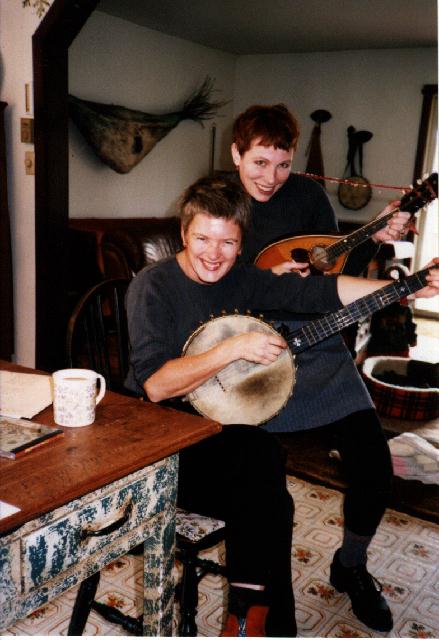
Here's a fun old pic of me (in back) with one of my mandolins- my 1915 Wurlitzer....lol!

Dusty Turtle
@dusty
01/17/13 05:39:18AM
1,851 posts

Got A Mandolin for Christmas


Adventures with 'other' instruments...

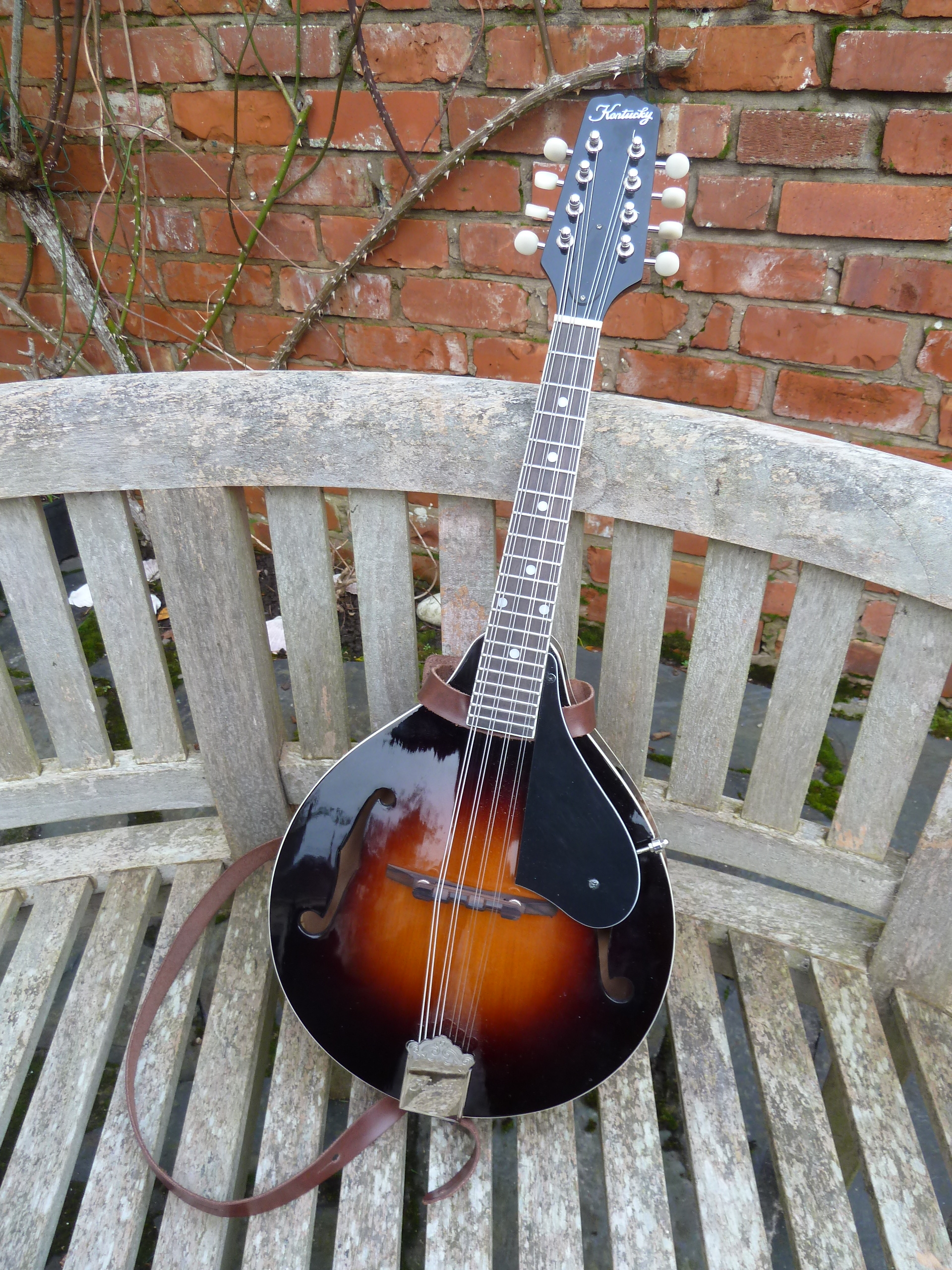
Robin, although I hardly ever play it anymore, I, too,picked up a Kentucky A-style mandolin a few years ago (I also splurged for the one with the solid top, but there is a model without it, so it is not quite the cheapest model) and played it regularly for a while when I shared a house with a guitarist far better than I. That instrument has a very balanced sound, though not as much punch perhaps as the real expensive mandolins.

But I think you are underestimating your abilities when you say there are no crossover skills. That fast and steady right hand you have developed is what's enabling you to jump right in and play some bluegrass chops as part of a rhythm section. Someone without your experience would have to play for a long time to be able to do that. And your general understanding of the music will eventually encourage you to add filler or small solos here and there. You will very soon start translating musical ideas from the dulcimer to the mandolin and eventually vice versa.

You seem to haveconcrete goals with the mandolin and I have no doubt that you will achieve them, but even if you don't take up the mandolin with the same enthusiasm and mastery that characterizes your dulcimer playing, I would bet in the long run, playing the mandolin will make you a better dulcimer player.

And your description of serious practice is a heartening one.

Robin Clark
@robin-clark
01/17/13 03:35:28AM
239 posts

Got A Mandolin for Christmas


Adventures with 'other' instruments...

Hi Rick - yep it is a lot of fun!

I think that having a very specific goal really helps to move skills forward (the goal for me is to play the mandolinin our band's set at gigs on roughly 20% of the set by the end of 2013 - so I need a least 5 tunes at stage performance level on the instrument), each little bit of practice time is focussed on taking little steps forward towards that goal. Also, I always expect to struggle a little whenever I practice. If I'm not struggling to do something new then I'm not learning anything. So whilst practice is 'fun' for me on all my instruments that 'fun' comes from meanngful, results focused practice. Ican rememberthat Stephen Seifert put up a quote somewhere from a pro musician that was something along the lines of "The more I learn to play my instrument the harder it gets to play". I think that's because each new skill learned opens up more doors of possibility and is also stacked on previous skills - so you just end up building one skill on top of another that are all running consecutively.

We have a great metaphor for this phenomena in our village. Coming out of the back of the village we have an old cattle and sheep drovers road going up over Cadair Idris to Dolgellau - it is called the Ffordd Ddu or 'Black Road'. Quite a few of us from the village will mountain bike the 'up and over' on a regular basis. The 1000ft climb to the top takes about 40 minutes from the valley floor. We all comment how, despite cycling the road regularly for many years, the climb never gets any easier! We just do it a little faster some days or a little slower others, and generally faster than when we first started - but the feeling of effort remains the same. And this is how music practice should feel -the feeling of effort should remain high despite your skill level. The goal of practice is to physicallychange the way you play. If you are not working every time you pick up your instrument on changing the way you play by the time you put it down then your practice time is ineffective.

Robin

Rick Kennedy
@rick-kennedy
01/16/13 11:45:18PM
17 posts

Got A Mandolin for Christmas


Adventures with 'other' instruments...

Sounds like you are having fun, Robin--I mean, I think that I can hear it in your playing even though you are getting used to the instrument. Watching/listening to old Bill Monroe clips on YouTube is always fun for me, so I hope to hear some more from you on the instrument.

Robin Clark
@robin-clark
01/16/13 10:38:18AM
239 posts

Got A Mandolin for Christmas


Adventures with 'other' instruments...

Well I've been playing mandolin for a whole3 weeks now!!!! The model I have is a Kentucky KM140 (the bottom end of their range). It has a solid spruce top and maple laminate back and sides. The general construction was actually pretty good and the neck angle excellent. The frets had been leveled but not re-crowned - so I did that job and a fret polish. I popped a set of Gibson monel strings on it, cut the nut, set the truss rodand set-up the bridge intonation and height. Knowing nothing about mandolins I took the set-up measurements from Gibson's standard mandolin set-up (5/64ths bass side @12th and 3/64s treble side @ 12th) and it plays like a dream What I love about the instrument is just how much fun a mandolin is to play

Here's a sound clip of an improvisedlead break for Wild and Wicked World that I'm working on. As expected after such a short time I'm still veryclumsy with the instrument in my hands! Hopefully everything will feel more natural as we get more 'hands on' time together!:

Robin Clark
@robin-clark
01/10/13 05:33:52AM
239 posts

Got A Mandolin for Christmas


Adventures with 'other' instruments...

Thanks !

Rick, I don't think that the two instruments, dulcimer and mandolin, are complimentary from a player's perspective as there are no cross-over skills that I can see- the mandolinis a very different instrument to handle. I have a big advantage coming new to the mandolin over many beginners; and that is that I know the music I want to achieve very well. I've played dobro in a bluegrass band for about 7 years and so have stood next to a mandolin player for many, many hours watching what they do and hearing the part the instrument plays in bluegrass music. I have also played dulcimer for many hours with a mandolin player (The Kitchen Sessions) although for much of the time he switched to mandola or tenor guitar.

So my mandolin practice is focussing on the physical - getting really confortable with the instrument in my hands as quickly as I can. I have no intention of becoming a great mandolin player but if I can reasonably knock out chops, fills and the odd lead break at a steady standard for bluegrass band gigs then that will be just fine. I play exactly those parts on dobro - chops, fills and lead breaks - so it is the physical techniques of the mandolin that I have to concentrate on. For example the act of playing chops, in time, on the off-beat, to drive the band along I have already completely wired on dobro, and for the last 18 months or so since our mandolin player left the band I have taken up that role to an evengreater extent. So on mandolin I have focussed on getting my instrument hold,pick grip, strum technique and 4 finger chop chords practicedmost because for85% or more of the time I spend with the instrument in my handson stagemy primary job will be classic mandolin chops to drive the band along. I need to work out some kick-offs, a couple of turnarounds, a few finishes and some lead breaks to whatever tunes I switch from dobro to mandolin on (I'll probably use a lot of vibrato double stops on my lead breaks as they look flashy, sound bluegrassy and eat up time - and are far easier than intricate fast runs!!!!!!!) - and that's going to be about the sum of my mandolin playing

Robin

  598